Today's News?

As I’ve stopped watching the #BiasedBroadcastCoy and find ITV and Channel 4 to be regurgitating pretty much the same material, so I’ve been searching around for a more impartial source of news … one that doesn’t send me lurching for the off button within seconds of turning it on.
This week I found an interesting channel called “UKColumn” on Youtube which on the day I found it seemed to be really good – as the day I looked they had a lead article on climate:

However, since then I’ve tried watching them and I find myself falling asleep as they have a very slow delivery for a massive 40-50minuts, it’s entertaining for a bit but all I’m really doing is replacing biased BBC opinions for ones biased against them with a very slow delivery of only 4-5 “news” articles a day.
Also, it doesn’t in any way cover anything in Scotland.
So I was trying to work out what it would take to produce news for Scotland. My guess is that even a very quick summary would take several hours. But the first problem is identifying what is “news”. So, today’s exercise is to identify the items that may be considered news today:

  1. UK Supreme court – the ongoing case.
  2. Trump appointment of EPA – the implications for global warming alarmism
  3. Scottish “Curriculum for excellence” failing – the way yet more political interference is destroying our education system in Scotland
  4. Facial reconstruction of Robert the Bruce:
  5. Death of Mark Griffin MSP – not that I know anything more than he died.
  6. Child abusers in sport – coming up a lot
  7. Late trains – Labour in Scotland have been running a campaign
  8. £13.6 million to establish new Wellcome Research Centre

This is an interesting Video:


PLEASE ADD ANY CURRENT NEWS STORIES (not necessarily Scottish, British or even in English)

Posted in Climate | 7 Comments

When attacking the global warming scam becomes "politically correct".

I hate bandwagoneering politicians who will jump on a cause just to serve their own careers. So, I respect someone who sincerely believes global warming is an issue, far far far more than someone who seeing the tide in turning in the US, suddenly starts speaking out against global warming.
However… looking at the news today, I see that there are now two types of articles:
The numpties: Guardian, Independent – who are rattling on about the impending danger the the accelerating global warming as they have throughout the pause.
The new “political consensus” which is to attack global warming. About half of which I recognise, and half of which seems to me to be “Johny come lately”. I won’t name names, as I can’t be certain which have always held their views and just now feel they can speak out, and which are just using the change in tide to try to ingratiate themselves with the new administration.
Obviously, I think bandwagoneers are pretty despicable people, but they are an important barometer of “what’s in” in politics – and clearly many former pro-alarmists are now in the process of changing their colours (at least for the next four years).

Posted in Climate | Comments Off on When attacking the global warming scam becomes "politically correct".

A colour map of temperature change

(Howgraph-2-2 SkepticalScience views global warming – one way only)I don’t usually deign to ever use the GISS “temperature” graph because it’s fraudulent. However, when I saw a graph of temperature trend on WUWT
I immediately realised that whoever wrote the article failed to understand the nature of natural variation. They had produced a plot showing the trend on GISS giving a colour for the trend over different periods. And had plotted the colour by the mid date of the trend (X-Axis) and length of the trend (Y-axis) and produced this (right):
But because most of what we are seeing is natural variation, and a variation of 40years is as likely as 20 years is as likely as one over 10 years. The way they had put the graphic together meant that the colour scheme was overwhelmingly dominated by the long term noise (25+ years).
So I wondered what it would look like if I used a log scale. The following was produced simply by scaling the above graph – doubling the scale for every halving of period (I stopped increasing the scale of shorter periods when it appeared to have no detail).
Also, as I’m not just going to print fraudulent material on my blog, I’ve cooled the trends by about ~0.3 (which mainly impacts the perception of the longer term trends)

temp1 Discussion

The average length when the scale is on this logarithmic format is around 5years. And not surprisingly there is almost no sign of any warming or cooling trends below 5year. Indeed, I’m surprised how regularly we change fro blue to red.
It’s then apparent that around periods of 5-10 years we start to see repeated periods of green (virtually the only part of the plot)
However, now I look, as we move up the plot, the size of the peaks get larger. So a change in trend lacks prominence at the bottom, whereas a 1 year trend over 1 year should be as prominent as a 40yr trend over 40 years. So, as it’s late, I’ve quickly used a distort to create an image where the variations in trend have roughly similar prominence irrespective of their length and this produces the image below.
curl1Now the question I’m asking myself is “why does the image move from a region of rapid climate change over periods of less than 5year, to one with very low rates of climate change over periods longer than 5years

Time for bed

Posted in Climate | Comments Off on A colour map of temperature change

2017: The year of the climate scandals

A while back I produced this image of a dinosaur:

An overview of the political process from Climategate to present.

An overview of the political process from Climategate to present.


We can time the instant that kick from Climategate will reach the “Brain” it will be:

Friday, 20th January 2017.

The day Trump, the US’s 45th president will be sworn in at noon on the steps of the U.S. Capital.
What is even better, is that far from arriving out of the blue, the Climategate establishment can see the pain coming, they know what is going to happen when Tump comes in and with the Senate and Congress being controlled by Republicans, they know there is nothing they can do about it except squeal.
underarockOf course, the corruption we see and know about right now, will be nothing as compared to what will be revealed when Trump’s appointees lift the lid on these organisations which for so long have festered under corrupt Democrat rule. And no doubt with a favourable president, Congress and Senate will help out. Indeed, the 20th January 2017, may see a “Black Friday” rush of Republican politicians eager to make their name by “draining the swamp” to reveal the corruption of the Democrats – so long protected against investigation by a corrupt Democrat president.
I fully expect a series of scandals … and they have got to happen quickly so as to ensure the blame is put fairly and squarely on the previous administration where it belongs.

2017 will be the year of the climate scandal.

And it will not just affect the US. Because although the US is the head of the global warming scam, the body lies in other places like the UK & Australia. And just as those in the US can do nothing but watch “retribution coming down upon them” … likewise those in the UK and Australia who have so long enjoyed the luxury of throwing vile made-up insults against sceptics whilst totally protected by the establishment (e.g. Nurse, Lewandowsky) can now look forward to being exposed and ridiculed for what they really are and there will be little their friends in the establishment can do about it.

Posted in Climate | 2 Comments

The Autistic nature of Academia

I have spent much of the last years trying to understand why it is that academics fail to understand the nature of the global temperature signal, whereas most engineers and those of a pragmatic nature who have studied the subject find themselves … let’s just say sceptical of the academic viewpoint.
In the past I’ve tried to explain this difference through a mechanistic approach: that academics do not encounter the same real world problems with the same real world knowledge, so when presented with a real world problem with real world noise & “natural variation”, they have no relevant skills or experience to draw on and so fail to recognise the true complexity of the situation. But I’m beginning to suspect a psychosurgical deficiency in the way academia behaves which is akin to autism.
Last night after watching a film on AI, I was discussing possible alternative strategies for developing AI with my wife in which I asserted that perhaps the biggest block to AI, was that academic researchers are trying to mimic their own “intelligence”. In other words, they may be basing their views on the false premise that what they perceive as “themselves” is “intelligent”. And the reason they cannot see beyond the idea of an “intelligent self” – is that they are falsely arrogant of their own abilities. (Without going into details, it would be like a kid using a calculator. Is the kid with the calculator “intelligent” – just because they come up with the right answers. Therefore is the academic who merely draws from the accumulated knowledge to answer a question really “intelligent”?)
Then afterwards I started researching Maasai group marriage traditions, and reading the academic papers I found the same kinds of “holier than thou” attitude in which those papers were trying to explain why the Maasai were not monogamous “like us”. I was just trying to understand – without allowing my own prejudices to get in the way – why group-marriage was the preferred system of the Maasai. But the academics appeared to want to explain why the Maasai “weren’t like us”.
My question: “what do the Maasai themselves think about group marriage versus monogamy”
Academic question: “why do the Maasai practice group marriage (with the implication they should be monogamous)”?
And, I am finding this more and more: academics are not asking the questions that I want to have answered. They simply either are not interested, or perhaps more accurately, do not understand the types of questions I ask. What is going on here? Continue reading

Posted in Climate | 2 Comments

The death of the expert

Whenever someone challenges me for not believing in this or that “expert” I have a simple response:

“I’m an expert on experts – I’ve written a book** on the subject and trust me, you can’t believe experts”

Of course, if I am an expert as I say, then my expert opinion means that they should believe me. Which means that they should not trust experts like me. Which means they should not believe me. Which means they should trust experts like me …
However, the deeper question is why am I an expert merely by publishing a book? The answer is that in the past, if you did publish a serious book, it meant that some big publisher had read your content and thought you worthy of publishing. In other words, publishers were deciding who was and was not an “expert”.
Likewise, if a TV program wanted to have an “expert”, a journalist would ring around a few of his buddies from School (Eton) or University (Oxbridge) and whilst it was unlikely that any had actually studied the subject themselves – as long as they had a degree which sounded vaguely relevant, they could pontificate on the subject and fool the audience enough to pass as “an expert”. An again, the people who were acting as “gatekeepers” to this class of “experts” were the universities  who accredited them as academics and journalists. So, e.g. an “expert” from Oxbridge was worth more than an “expert” from hull – even if the hull “expert” had actually studied the subject – because the University itself gave a kudos to people.

The High cost of being an expert in the past

Before the internet, in order to be an expert in a subject, you needed access to the very latest research in the subject, that meant buying all the latest books written by others interested in the subject and subscribing to the journals and as such you needed a deep pocket. Almost no individual became an expert using their own money. Instead, they belonged to some organisation – usually a University (paid for by the public) and they used their privileged access to increase their own knowledge immeasurably beyond that of the general public.

Then along came the internet … and we all could become experts

But when the internet came along, anyone with an interest could read and write on a subject at almost no cost. Suddenly, instead of having to have shelf loads of highly expensive books and subscriptions to very expensive journals … almost all the information start to appear on the internet and the general public, with an interest in any subject, could very quickly become as expert. Indeed – due to the knowledge on the internet, and the ability to focus on just one small area – those on the internet could become more expert in any specific subject than the academics.
That was bad enough … but because internet experts do not spend their time just talking to those in the same peer group … because we are not immersed in an “ivory tower” world where we only talk to other ivory towers, we tend engage with people at all levels of knowledge, and so are inherently better at communicating our ideas to other similar people on the internet. And unlike an academic who is forced to teach dumb students and sick to death repeating the subject … experts on the internet are experts through interest and so they write with enthusiasm … not lecture down to people because they are paid to lecture.

It’s not the death of “expertise”, instead it’s the death of a different social class called “experts”

As a journalist – with no expertise – the change is inexplicable. A few years ago, their friend let’s call him Paul (a biologist) could be hauled on the BBC to discuss climate change and no one would complain. But now, as soon as they put this “expert” on the screen, even though his expertise has not changed at all – indeed he’s even read a book on the subject++ – there are howls of protests. Why don’t people believe the “experts” any longer?
The answer, is that there are now thousands, even tens of thousands of experts on the internet with more knowledge than their friend Paul. Paul hasn’t changed, instead the audience is now filled with experts quite capable of taking on their friend Paul in an argument and tearing the opinionated-third-rate-scientist-who-only-gets-on-the-BBC-because-he’s-a-chum-of-the-editor to pieces.
And indeed, even someone who knows less than Paul (which is difficult) knows they can find experts who do know more than Paul discussing the subject on the internet and because they can see a range of experts, they can see Paul’s clear political bias and lack of any real knowledge to back up his views.
Paul is no less of an expert than ever. Paul is no more biased in his views. He’s no more keen to “science-wash” his eco-politics and present his views as science to the public.
The difference is that the public, thanks to the internet, are now far more informed, better at telling who is and who is not an expert, and is sick to death with people like the BBC passing of third rate knowledge and biased opinions – which wouldn’t last a few minutes on the internet – as “experts”.


**The Academic Ape: Instinctive aggression and boundary enforcing behaviour in academia. Available for kindle at a price from Amazon or for free
++Likely “an introduction to climate alarmism for undergraduates”
 

Posted in Academia, bbc, Climate, internet Revolution, Sceptics | Comments Off on The death of the expert

Sexual partners: a mathematical conundrum

I came across this “fact”:

According to the 2010 Health Survey for England, the mean number of sexual partners is 9.3 for men and 4.7 for women.

…. obviously men are just more promiscuous than women … but with whom?

Please explain!


Text:
When asked about the number of opposite sex partners they had had altogether in their life so far, men reported a mean of 9.3 female sexual partners, while women reported a lower number, a mean of 4.7 male sexual partners. The majority of participants indicated that they were certain of the number of opposite sex partners they had had, but 33% of men and 17% of women said that the number was an estimate. More women than men reported having sexual intercourse with only one partner of the opposite sex in their lifetime (24% of women compared with 17% of men), and conversely more men than women reported having sexual intercourse with ten or more partners of the opposite sex (27% of men and 13% of women).
 

Posted in Climate | 3 Comments

Provan: no one can tell 1C/century warming or cooling in Natural variation

1ftrend

See end


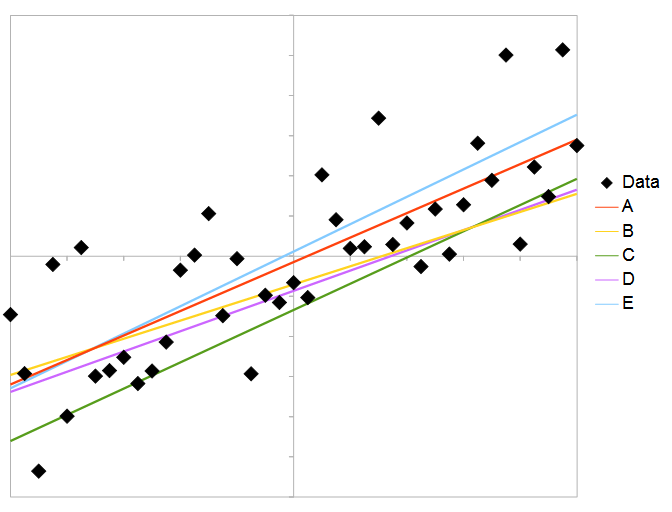
A year ago Doug Keenan set a very simple challenge to those claiming they knew for certain the world was warming:

If its so easy to detect <1C warming in the last 100 years – A prize for anyone who can identify which simulated run of natural variation from 1880–2014 has had 1C added or subtracted.

Result

Despite the $100,000 prize, there were only 33 entries. Almost all entries were submitted by professional researchers in fields such as physics, computer science, engineering, econometrics, etc.  No winning entry was received.
So, for all the nonsense about “global warming being obvious” in the temperature plot, not one of the idiots who say “it’s obvious” … was able to demonstrate their omnipotent ability to correctly spot trends in natural time series when put to the test.

The HYPOCRITES

But well done to those who actually did submit an answer!
Below is the key information, but for more on the competition info from Doug see Contest Remarks
“After the Contest was announced, the Contest time series (1000 series) were analyzed by the statistician Andrew Gelman. Gelman’s analysis is described in a post on his blog. The analysis concludes that a person trained on time series should expect to correctly identify 854 ± 10 of the 1000 series. (Note that identifying 900 series is required to win the Contest.)
“Simply put, correctly identifying fewer than roughly 865 series can be reasonably done without using specialist techniques from the study of time series. Despite that, all entries to the Contest identified fewer than 865 series. Thus, none of the contestants demonstrated any skill with time series. That occurred even though some of the contestants have substantial professional experience analyzing time series.

My Solution

Assuming Doug Keenan had chosen a method that produced completely random output, the only information in the time series of any relevance was the gradient.
Therefore if I had responded I would have taken a simple average gradient (LR) and picked those with the highest absolute gradient and depending if +ve or -ve have said they were +1 or -1C respectively. But unfortunately, I was missing one vital piece of information: how many had been adjusted.
Therefore, a bit of stats is required. We know the gradients fall into three buckets: those with no addition, those with +1/century and those with -1/century. Within each bucket the gradients should be a normal distribution (if the time series were random), and we know where each should be centred. So it should be possible to estimate the number that were in each bucket. That is just a question of putting each gradient into the most likely bucket. There’s probably some statistical trick for that, and I could have found it, but as Doug would have known this was the likely approach and have checked to ensure a 90% accuracy was impossible using this approach, so I knew it was pointless.
Instead, in order to win the $100,000 prize, it would have been necessary to “move away” from the optimum which would have been checked to ensure the prize could not be claimed, toward a sub-optimum solution which was sufficiently different that there was a small chance that it might have by accident picked the right ones (but most likely would be wrong).

But what if I did win?

It would then put me in a moral dilemma – since I could very well do with the money,  I’m very happy Doug ran the competition – but he clearly never intended it to be won – and certainly not by a sceptic.
However, I would still be interesting to see a graph based on the scale of gradient chosen as the cut-off (above which it is assumed +1 or -1C/century added) and what percentage would be right using this very simple approach for each cut-off. I assume the graph would rise steadily as the threshold was increased because at first each increase would identify more right ones than wrong. But eventually the scale would be too large and it would start identifying more wrong than right.

The Top Graph

It’s just natural variation – it’s just as meaningless as the “global temperature” graph.
 

Posted in Climate | 2 Comments

Monbiot: The Misinformation Machine

There was a time, when a religious zealot like Monbiot intentionally lying about bloggers like me would send my blood pressure rising.

The bloggers and institutes whipping up this anger were funded by oil and coal companies.

The simple truth is that I’ve not received a single penny for my work against the vile people like Monbiot who attack ordinary people like me.
But now with Trump … well if I were a cartoonist I’d draw a picture of me taking monbiot’s absurd pack of lies scrumpling them up and throwing them in the bin (not the recycling bin obviously).
Monbiot’s lost: He’s lost his marbles as he’s delusional about us sceptics. He’s lost his credibility after 18 years with no significant warming. And he’s lost the key political support from the US president. He’s lost!!
He knows that when Trump comes in, all the fake science is going out the door and when everyone sees the real science, Monbiot and the greenblob are on the garbage heap.

Posted in Climate | 1 Comment

Will Trump win the Election? (2020)

I’ve been reading a few environmental blogs like the Guardian, and there seems to be this idea that they’ll just have to hunker down and wait till they get a Democrat next time.
But aren’t they forgetting something? Won’t Trump win a second term? This question comes in many part:

  1. Would Trump want to stand
  2. Is he too old
  3. If he wanted to stand, would the Republicans allow him to stand
  4. If the Republicans allow him, would the people vote for him

I can’t predict whether Trump would want to stand, whether he would be fit to stand and what the Republicans will do.
So, the big question whether the public would vote for him.

  • As a “non-party” candidate – he is almost immune from any party  performance or scandals. So, unlike other presidents, he isn’t susceptible that way.
  • Most people who didn’t vote for him, would have been swayed by the massive media machine piled up behind the democrats making him out to be absolutely appalling. So, paradoxically, even if he’s just moderately bad, most people will feel he’s doing really well compared to their expectations.
  • And finally – he’s picked some really easy things to do – because they’ve been totally ignored by politicians and so are crying out for change. So, he’s not trying to improve something that’s been picked over time and time again. He’s got some really easy areas to work on which are going to show big results for little investment.

So, he’s not going to get caught by party politics, the Democrats have unwittingly set him a very low bar by which to excel and he’s chosen the “low hanging fruit” for policies.
It looks to me a sure thing! If Trump is willing and able to stand, he’ll be the next president till 2024.

Posted in Climate | 1 Comment